GSK Admin
"Every order. Every truck. Every status. One screen."
Fuel stations and bulk buyers had no single view of an order once it left the depot, phone calls and spreadsheets were the only way to check status, price or which driver was en route.
What it looked like.
How to read this case study: what I owned, what shipped and the verified outcome (My Role, What Shipped and Impact below) are factual. The surrounding strategy, vision, alternatives and metrics framework are interview-ready framing built on those facts, how I'd talk through the product thinking, not a claim that every metric or GTM motion was formally run at the time.
Challenges & baseline.
Challenges
Before this platform, order status lived in someone's head or a phone call, admins couldn't tell whether a 40,000-litre PMS order was still at the depot, in transit, or delivered, and every delivery-method decision was a manual back-and-forth with logistics. The real problem was never ordering itself, it was uncertainty after ordering: has it left, which depot, which driver, which truck, how much is delivery, when will it arrive.
Baseline
Order status visibility before this product: none, tracked informally by phone and paper.
What the customer actually needed.
Insight
Admins weren't asking for a faster way to place orders, they were asking to stop chasing the order after it was placed. Visibility beat notification: they didn't want to be told an order had changed, they wanted to open one screen and already know, which is why the product bet on a single source of truth rather than an alerts feed.
Job to be done
When I've placed a large fuel order, show me its status, cost, source, delivery method and responsible party without requiring me to chase several people by phone.
Vision, mission & the bets we made.
Every fuel order should be as trackable as a food delivery, price, depot, driver and status visible the moment it changes.
Give fuel buyers and admins a single source of truth for every order, from purchase to delivery.
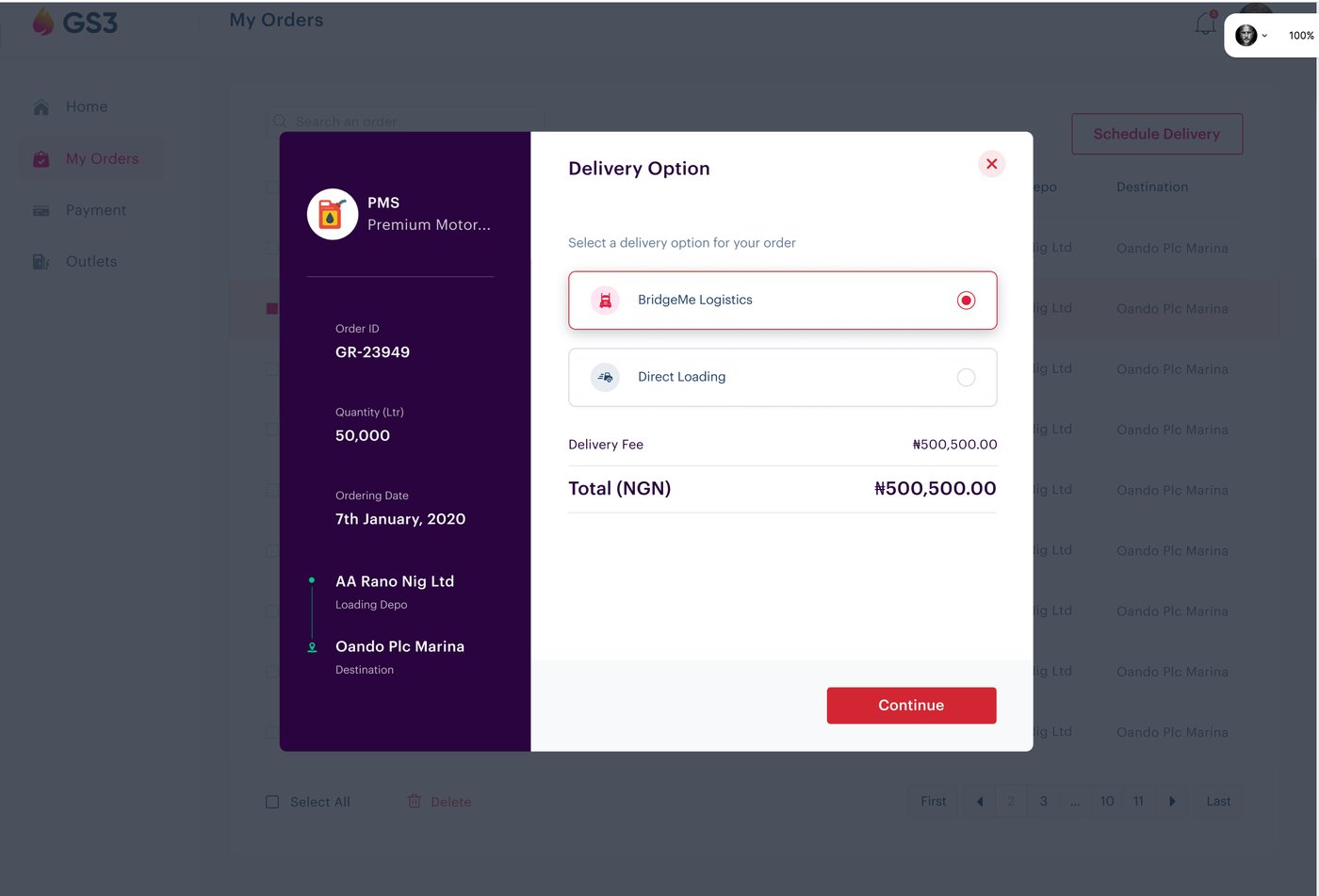
Make order status self-serve so admins stop calling depots for updates; make the delivery-method decision transparent with the fee shown before commit.
Ship order tracking with clear status states; ship a delivery-option chooser with fee and total shown up front; connect both to the same order record, depot, driver and truck included.
Strategic bets
- Show delivery cost before commit, not after, so admins choose with full information
- Treat Direct Loading and BridgeMe Logistics as first-class delivery options, not an afterthought
- Bind every order to a named driver, truck and depot so nothing is anonymous
- Create a single source of operational truth, every stakeholder references the same order state instead of their own version of it
Alternatives considered
The lighter option was to keep phone-based status checks but add a lightweight notification layer on top, faster to ship, but it treats the symptom, not the cause. The direction taken instead was a single order-state record every stakeholder references, admin, depot, driver, delivery method, so the phone call becomes unnecessary rather than just faster to answer.
What I owned.
Product Manager, owned the order tracking and delivery-option experience end to end, from order status states to the BridgeMe Logistics / Direct Loading decision flow.
What shipped.
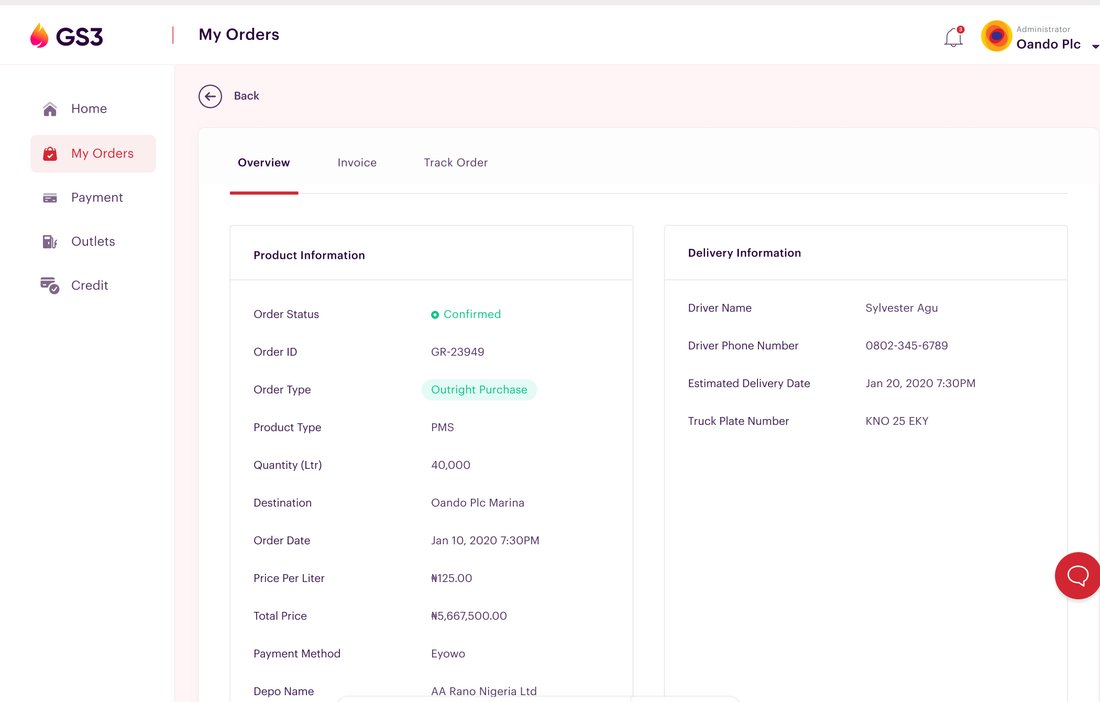
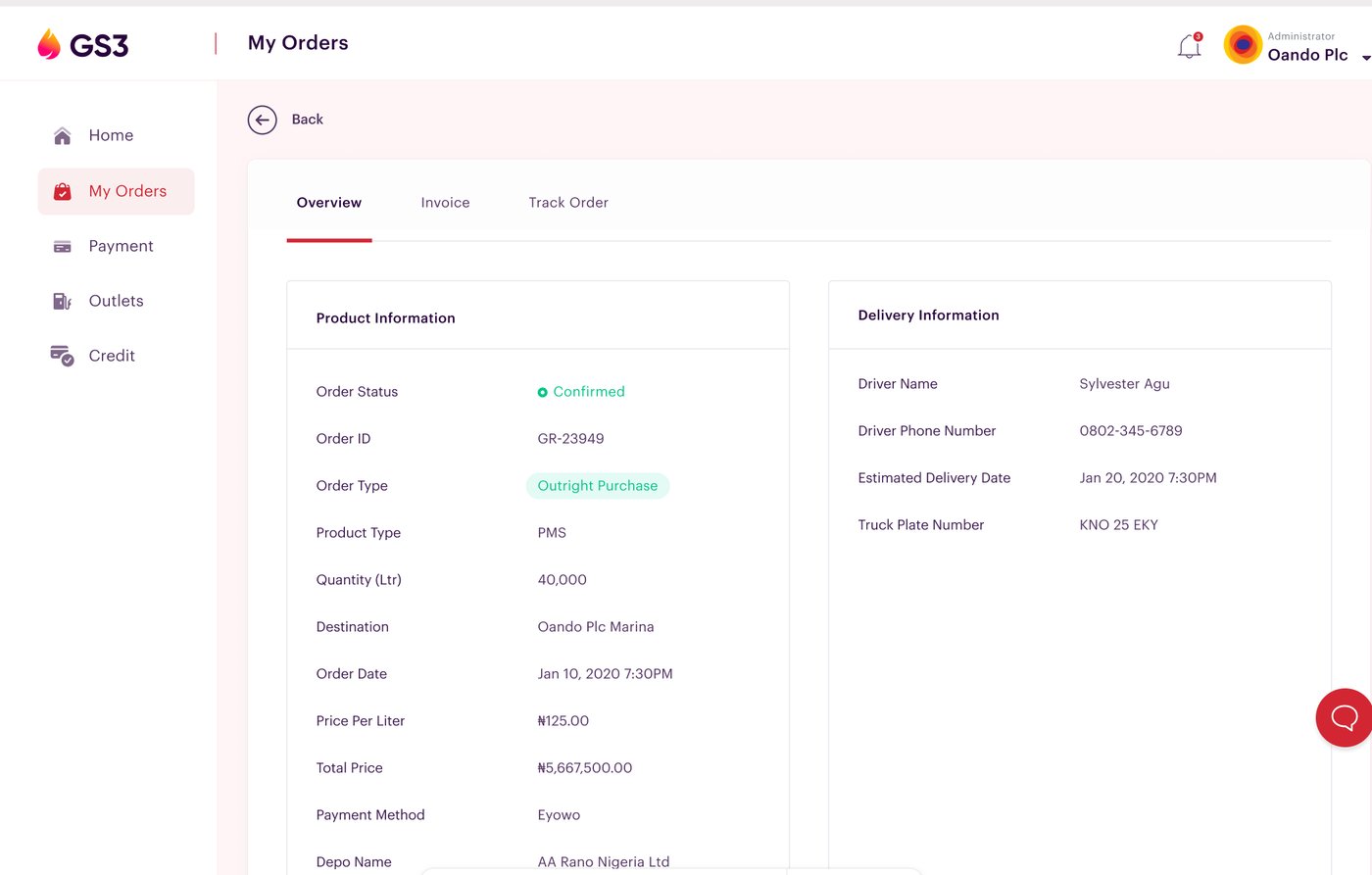
Admins can open an order and see everything that matters: order type, product, quantity, depot, delivery driver and truck plate, without a phone call.
How it got built.
Mapped the existing manual order flow, call the depot, confirm verbally, hope
Designed order status states around the fields admins actually asked for on every call
Built the Delivery Option flow, choosing BridgeMe Logistics or Direct Loading with the fee shown before confirming
Wired delivery details, driver name, phone, truck plate, ETA, into the same order view
How this reaches customers.
B2B/enterprise motion. Land with one distributor, depot or bulk-buyer network. Digitise the core sequence first, order → dispatch → delivery. Demonstrate the reduction in status-check calls, administrative handling and dispatch ambiguity. Expand from there into more depots, more customers, the driver network, and eventually pricing/analytics on top of the same order data.
North star metric.
Supporting metrics
- Recommended North Star going forward: percentage of fuel orders completed without manual status intervention
- Status-check calls per order
- Order-to-dispatch time and delivery completion rate
- Delivery-cost accuracy and status-data completeness
Guardrails
- Admin adoption of the new tracking flow versus falling back to phone calls
- On-time delivery rate
The verified bottom line.
Turned fuel ordering from a phone-and-paper process into a screen an admin can trust, order status, depot, driver, truck and delivery cost all in one place, no call required.
What I'd do differently.
Visibility beats notifications, admins didn't want to be told an order had changed, they wanted to open one screen and already know. Showing the delivery fee before commit, not after, turned out to matter more than any interface polish, it's the single decision that removed most of the back-and-forth calls to logistics.
More proof, more products.
See every product shipped and business built.