Movam
"Connect. Track. Deliver."
Logistics operators running deliveries across order management, dispatch and fleet-maintenance tools had no single place to see where a shipment or vehicle actually was, visibility was scattered across separate systems.
How to read this case study: what I owned, what shipped and the verified outcome (My Role, What Shipped and Impact below) are factual. The surrounding strategy, vision, alternatives and metrics framework are interview-ready framing built on those facts, how I'd talk through the product thinking, not a claim that every metric or GTM motion was formally run at the time.
Challenges & baseline.
Challenges
Logistics operators managing deliveries across separate order management, maintenance and dispatch tools had no unified view, tracking a shipment or a vehicle meant checking multiple systems or making a call. This is a familiar problem in supply-chain visibility generally, shipment information commonly sits across fragmented systems and organisations.
Baseline
Shipment and vehicle visibility before Movam: scattered across separate order, maintenance and dispatch tools with no unified tracking layer.
What the customer actually needed.
Insight
Customers weren't asking for a new logistics system, they were asking to see and control what was happening without throwing away the systems their business already relies on. Their existing tools held historical data, trained users, integrations and organisational dependencies, so "our system is better" was never going to be enough on its own, the switching cost could destroy the value proposition before it landed.
Job to be done
When a shipment or vehicle is in motion, help me see its real status without having to check multiple systems or make a call, so I can act on problems before a customer notices them.
Vision, mission & the bets we made.
Every shipment and vehicle visible in real time, regardless of the systems operating underneath.
Connect fragmented logistics operations into one real-time visibility layer, without forcing operators to replace the systems they already use.
Connect to operators' existing order management, maintenance and sales tools via API instead of requiring a rip-and-replace; give dispatchers two-way real-time driver and vehicle tracking; keep the driver app simple enough for last-mile riders to adopt without training.
Ship API integrations for order management, repair & maintenance, and sales automation systems; ship a driver app with live location and trip tracking; ship vehicle tracking with route and fleet analytics; structure pricing around delivery volume so operators of any size fit.
Strategic bets
- Integrate with operators' existing software via API instead of asking them to replace their order management or dispatch tools
- Treat the driver app as its own product, not a bolt-on, since last-mile riders are the ones who actually need to adopt it daily
- Support operators of any fleet size, from a single vehicle to 1,000+ deliveries a month, with tiered pricing to match
Alternatives considered
The real strategic question was rip-and-replace versus integration. Building an all-in-one logistics operating system would have given more product control, but at the cost of a migration barrier steep enough to kill adoption before it started, enterprise discovery showed replacing deeply embedded tools creates real implementation resistance. Becoming the integration and visibility layer instead meant lower adoption friction, and it's the direction the case explicitly bet on: API integration with customers' existing systems rather than asking them to replace what they already trusted.
What I owned.
Product Manager on Movam's logistics platform, under Tolaram's ventures.
What shipped.
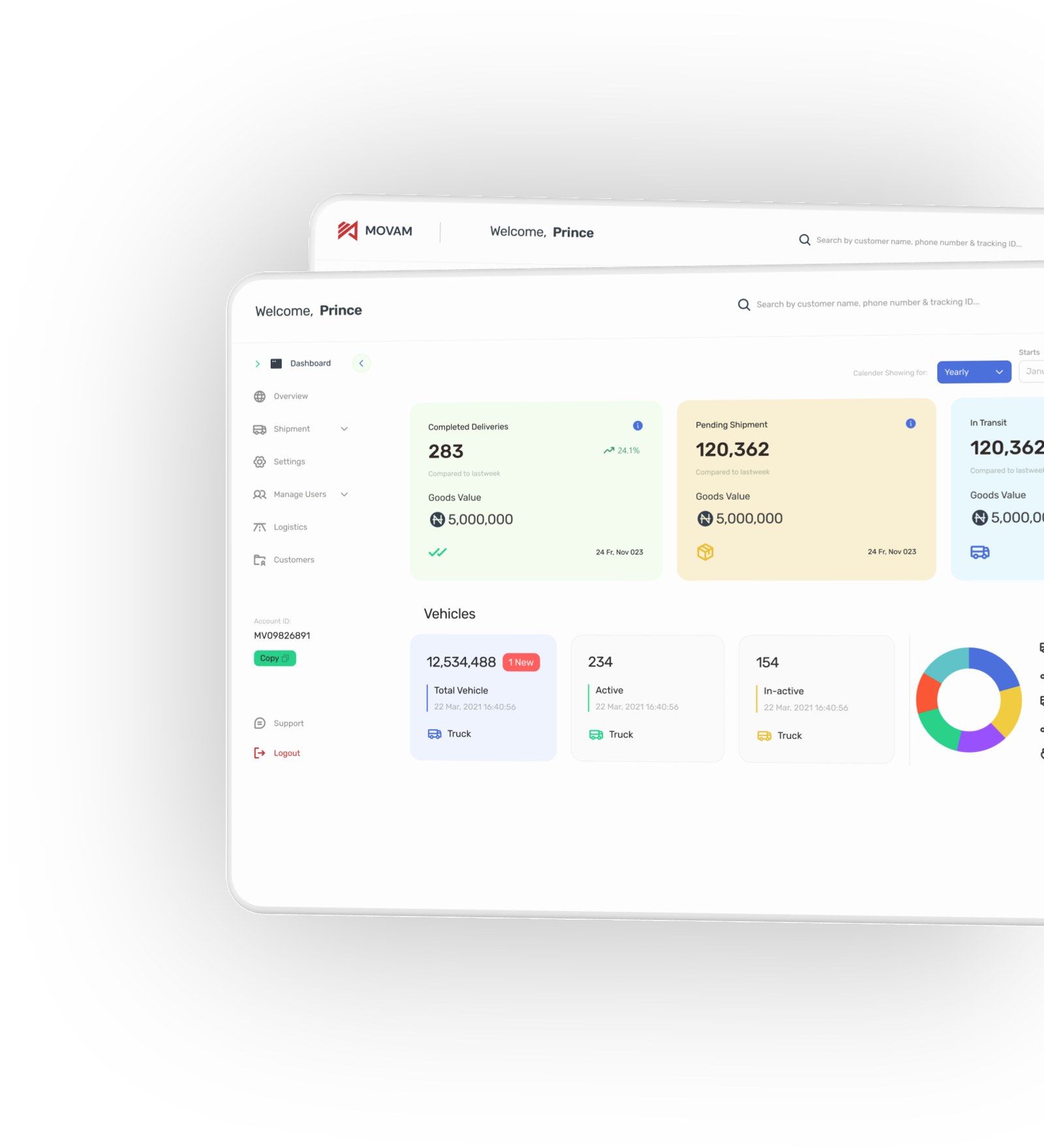
Movam integrates with an operator's existing order management, maintenance and sales tools via API, and gives dispatchers two-way real-time tracking of drivers and vehicles through a dedicated driver app, with tiered pricing from single-vehicle operators up to 1,000+ deliveries a month.
How it got built.
Mapped how logistics operators' existing order management, maintenance and dispatch tools already worked before designing Movam's integration layer
Built the driver app for real-time location and trip tracking on the last mile
Shipped two-way vehicle tracking with route and fleet analytics
Structured tiered pricing (Basic, Advance, Enterprise) around delivery volume so small and large operators both fit
How this reaches customers.
Beachhead ICP: companies where a logistics failure has real financial consequences, FMCG, e-commerce, distribution, manufacturing and 3PL. Enterprise pilot: one customer, one route, one fleet, one integration, prove the value before expanding. The value proposition deliberately wasn't "GPS tracking", it was operational visibility without replacing the systems already in place. Commercially, Movam's tiering was structured by fleet size, shipment volume and integration complexity, the existing case already documents pricing built to support smaller operators through customers processing 1,000+ deliveries a month.
North star metric.
Supporting metrics
- Recommended North Star going forward: percentage of active shipments visible end-to-end through Movam, rather than delivery-capacity tier alone
- On-time delivery rate and ETA accuracy
- Percentage of fleet actively tracked and driver activation
- Time to integrate a new enterprise customer, since that's the real adoption bottleneck for an integration-first product
Guardrails
- Failed delivery rate
- Customer status enquiries, if these don't drop, the visibility layer isn't actually being trusted
- Integration failures with a customer's existing order or maintenance systems
The verified bottom line.
Gave logistics operators a tracking layer that plugs into the tools they already run instead of forcing a switch, order, vehicle and driver status visible in one place.
What I'd do differently.
Operators don't switch systems easily, even for a better one, they've already trained staff and built processes around what they have. Building Movam to connect via API instead of asking anyone to replace their existing order or maintenance tools removed the single biggest reason a logistics operator says no. The broader lesson: better functionality doesn't automatically beat switching costs, sometimes the strongest product strategy is becoming the connective tissue between the systems a customer already trusts, not replacing them.
More proof, more products.
See every product shipped and business built.