Uparti
"Play together. Compete instantly."
Players wanted a quick, social way to play trivia and simple games head-to-head with friends, not just solo against a clock.
What it looked like.
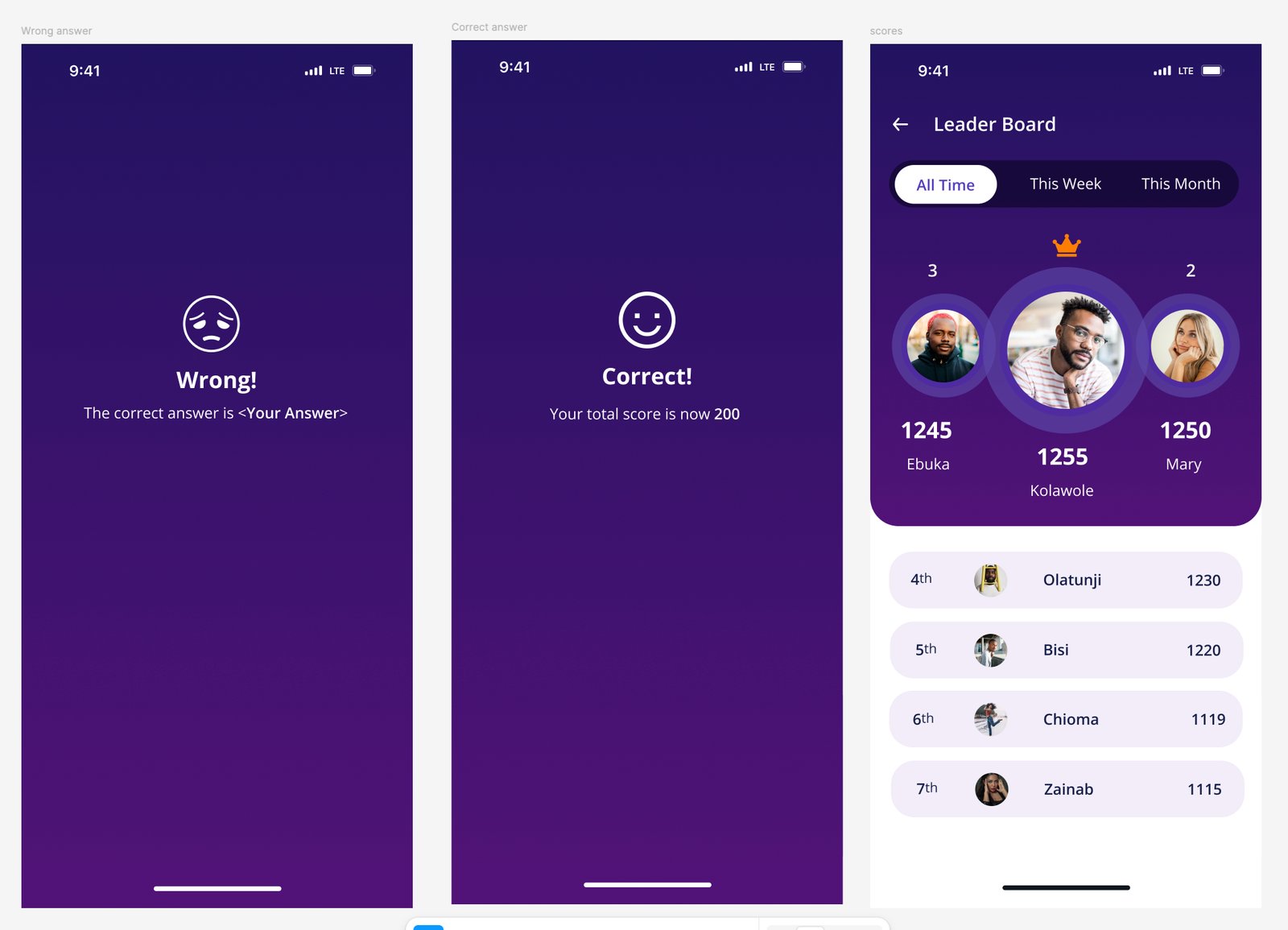
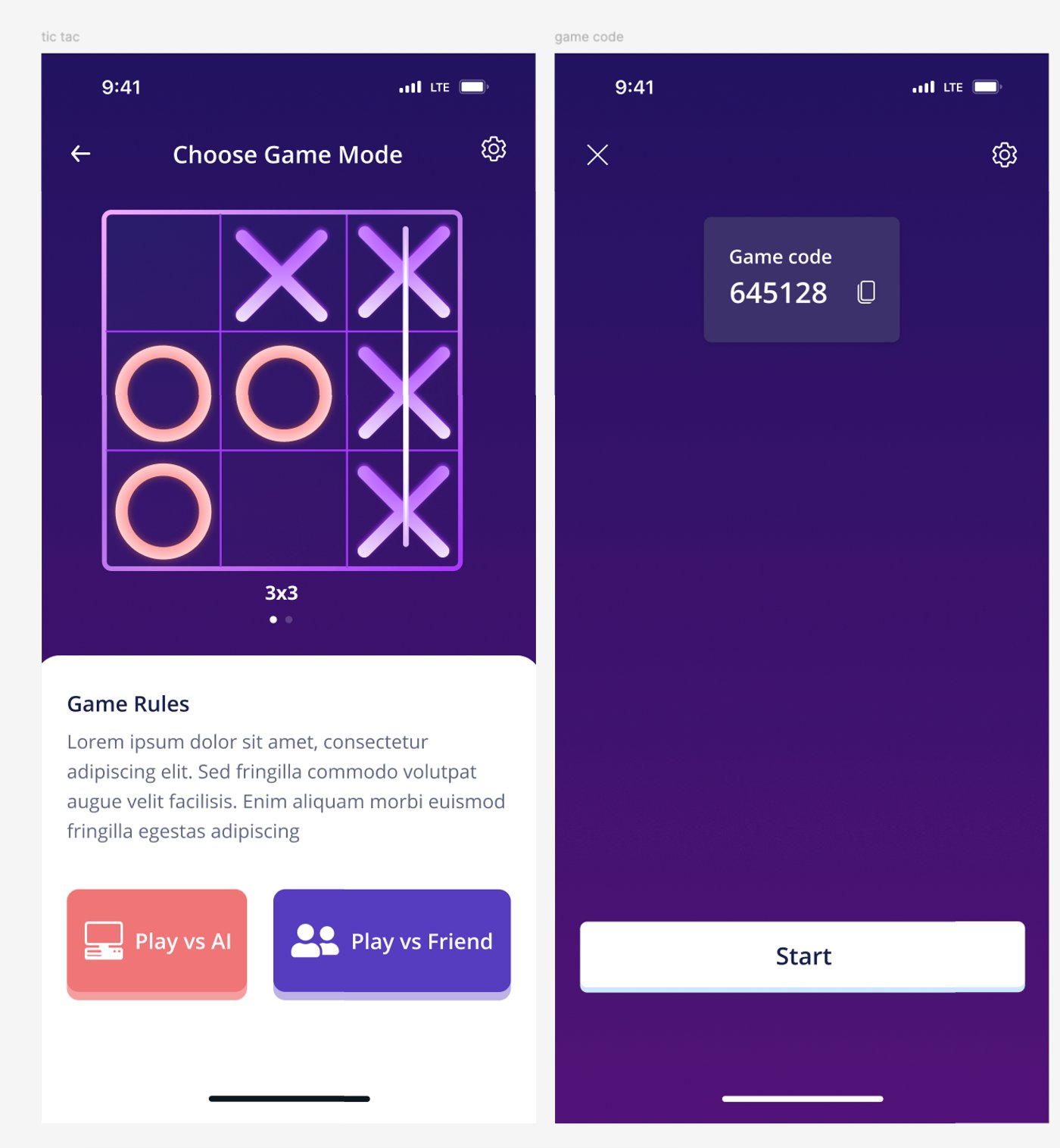
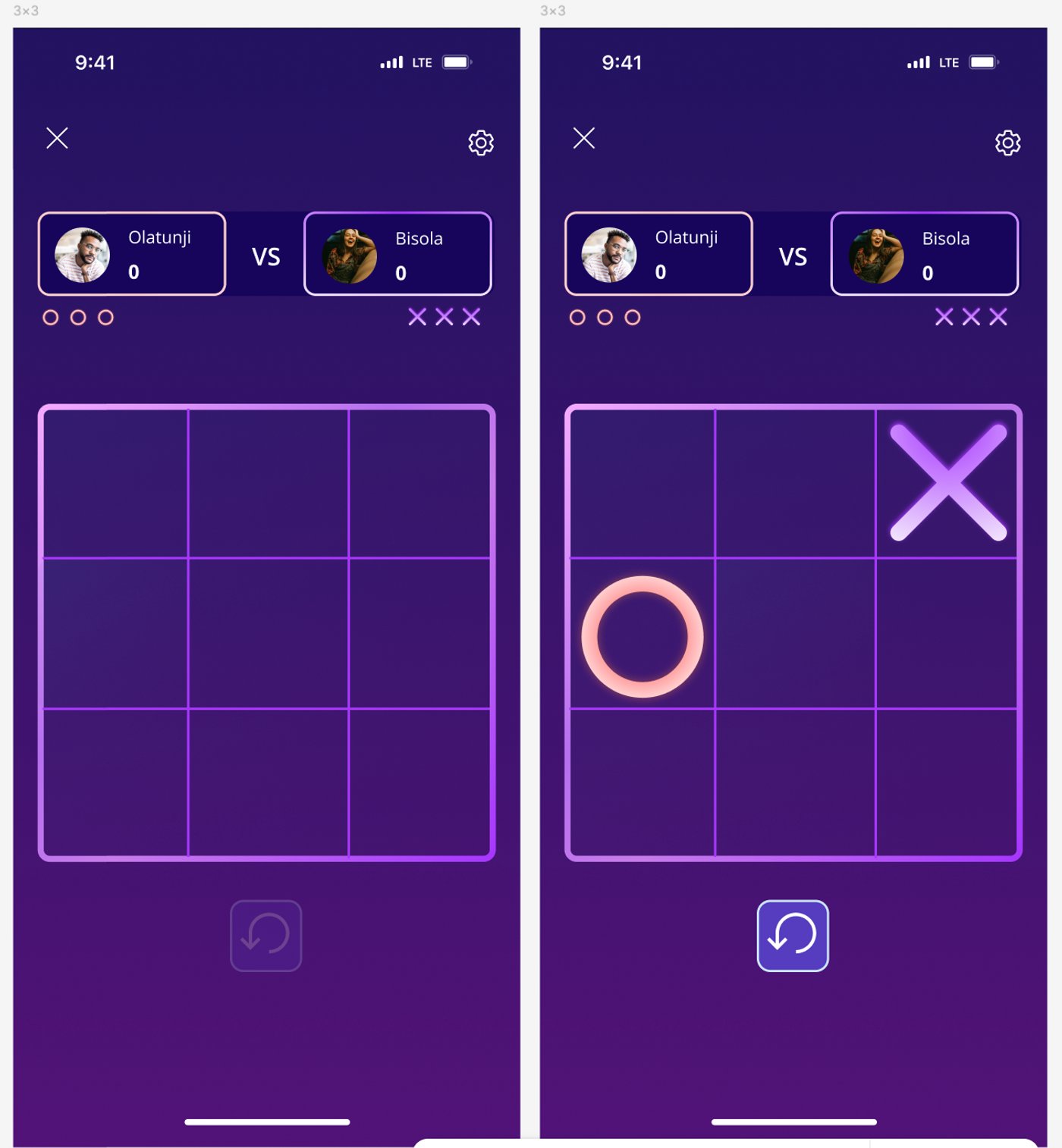
How to read this case study: what I owned, what shipped and the verified outcome (My Role, What Shipped and Impact below) are factual. The surrounding strategy, vision, alternatives and metrics framework are interview-ready framing built on those facts, how I'd talk through the product thinking, not a claim that every metric or GTM motion was formally run at the time.
Challenges & baseline.
Challenges
Most trivia apps are solo, answer, move on, with no reason to come back and no one to play against; a games app needed a reason to open it with a friend, not just alone. Mobile gaming remains the largest segment of the global games market, and research into multiplayer games has found social relationships can meaningfully drive long-term retention.
Baseline
Multiplayer before this: none, trivia was a solo format with no lobby, no shared code, and no live opponent.
What the customer actually needed.
Insight
The real product isn't trivia, it's competition with another person. That reframes what actually drives retention, the social graph and the live match loop matter more than adding more questions, which is why the match shell, not the question bank, was the thing worth investing in first.
Job to be done
When I want a quick game, let me play head-to-head against a real person right now, without needing to coordinate a schedule or open a different app.
Vision, mission & the bets we made.
Make everyday games better because someone else is playing with you.
Turn casual games into fast, social competition.
Make a match feel live, with an opponent's score updating in real time; give players a reason to return, badges, categories, streaks; gate premium categories without crippling the free experience.
Ship head-to-head trivia with a visible opponent score and timer; ship at least one classic 1v1 game on the same match framework; ship a category library mixing free and premium content.
Strategic bets
- Reuse one head-to-head match shell (avatars, score, VS) across trivia and classic games instead of building each game's UI from scratch
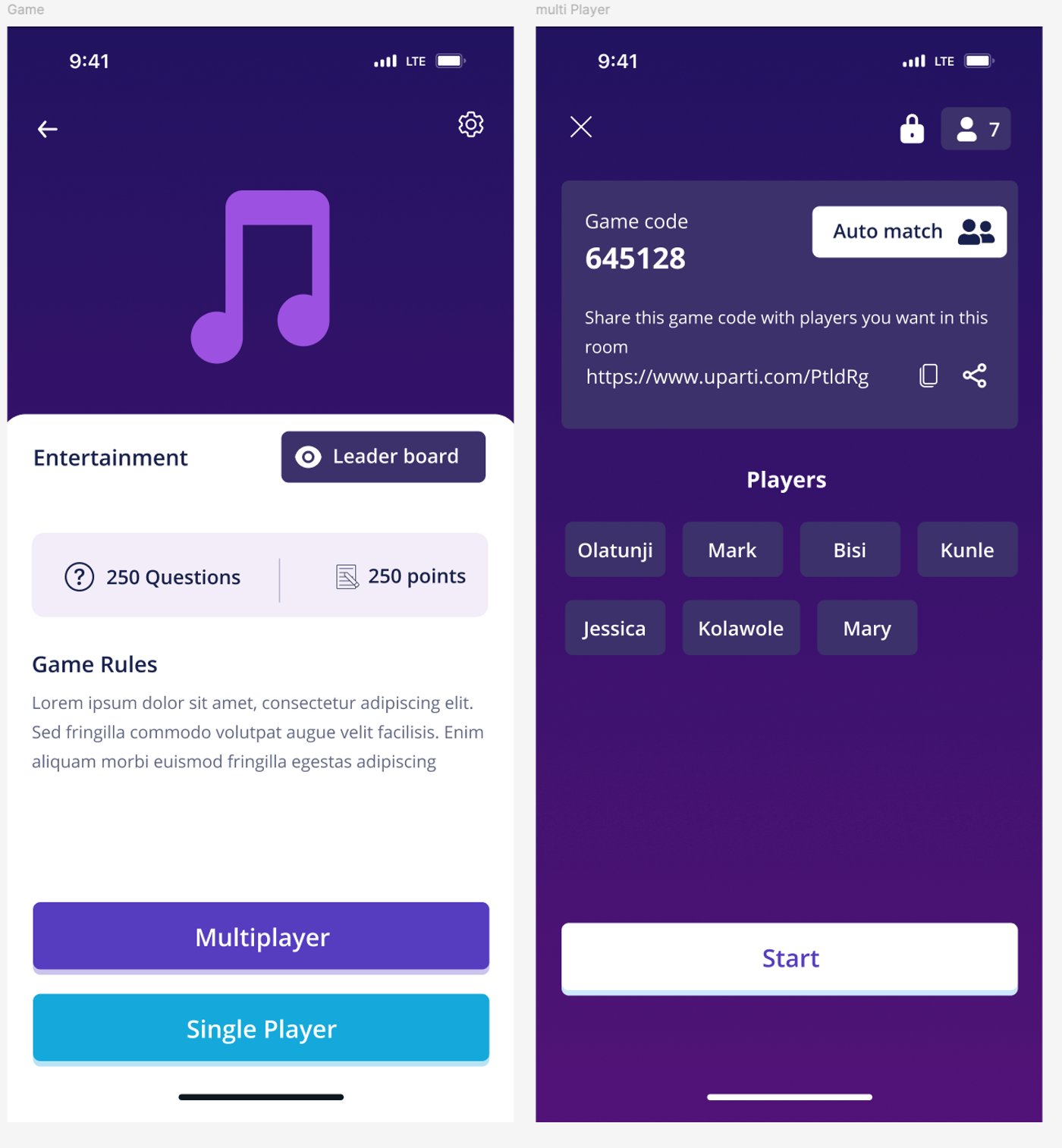
- Make joining frictionless, a shareable game code or Auto match, so a lobby fills without everyone needing the app open at once
- Gate categories, not games, behind premium so the free experience never feels crippled
- Give the leaderboard real time windows (All Time, This Week, This Month) so a bad week doesn't bury a player's rank permanently
Alternatives considered
The faster route was to keep the original solo format and simply add more content, more categories, more questions. That was rejected because it doesn't address why players weren't returning, more solo content doesn't create a reason to come back if there's no one to play against. The direction taken instead was building one reusable head-to-head match shell (avatars, score, VS) shared across game types, so trivia and Tic-Tac-Toe could both run on the same live, social framework rather than each needing its own build.
What I owned.
Product Manager, owned the multiplayer match experience end to end, from game rules through lobby, live match and leaderboard.
What shipped.
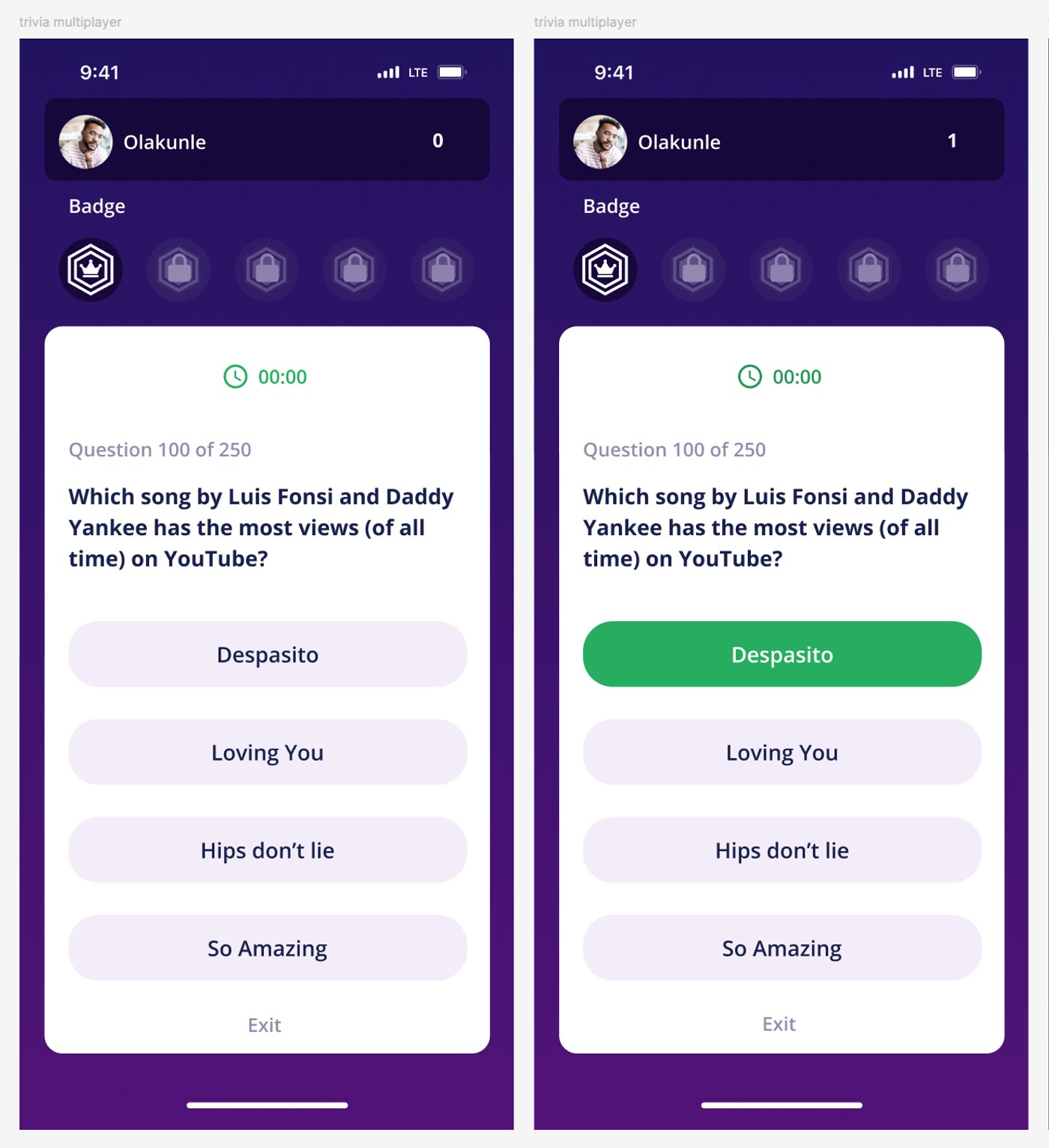
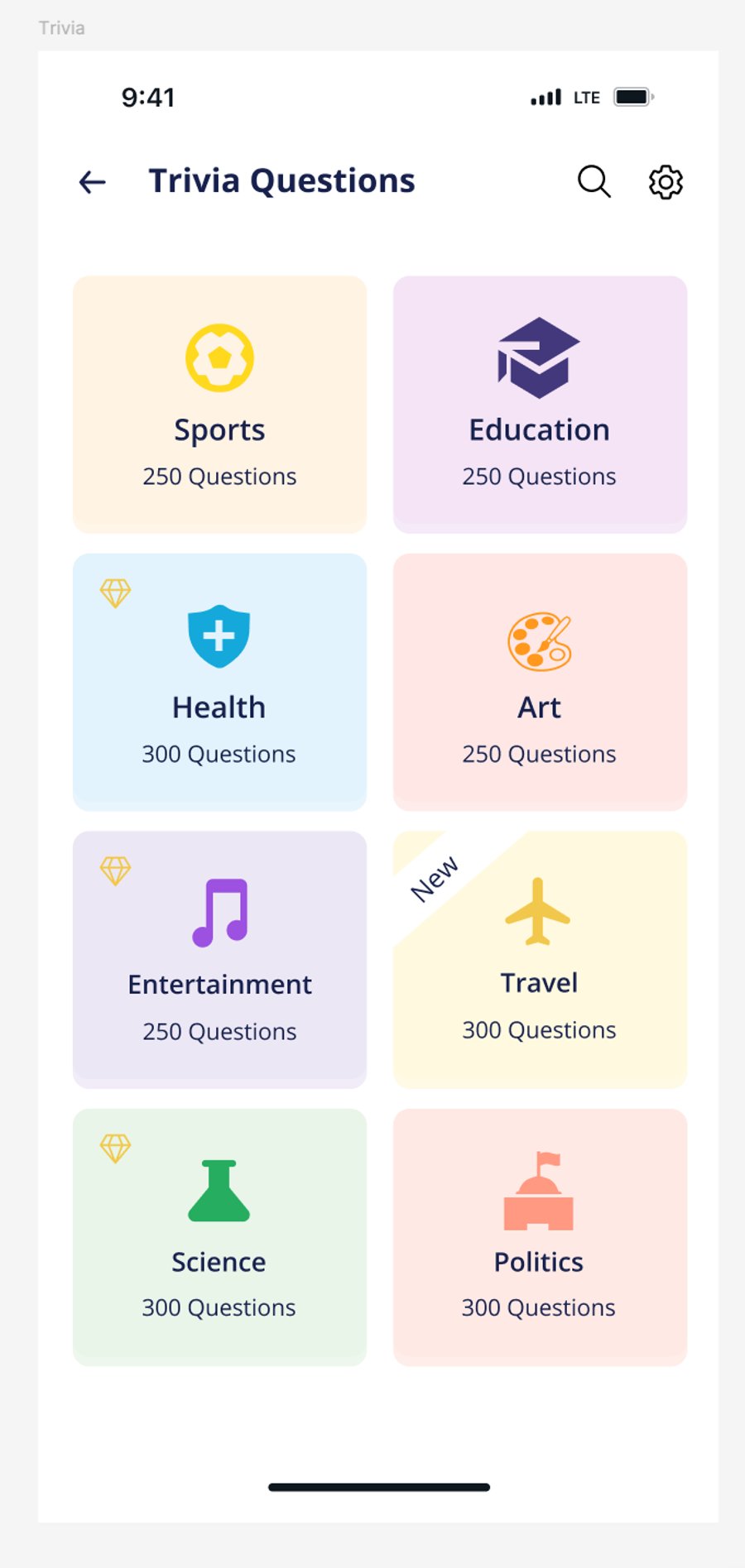
A player can create a room, share a game code or use Auto match to fill it, see who's joined before starting, play a live trivia match or Tic-Tac-Toe with the same head-to-head shell, and land on a leaderboard (All Time, This Week, This Month) with a crown on the top spot. 8 trivia categories are live with question counts from 250 to 300 each, some free, some premium.
How it got built.
Designed a shared 1v1 match shell (players, score, timer) reusable across game types
Built the lobby, game code sharing, Auto match, and a visible player list before start
Built trivia with category selection, question counts and live scoring
Added Tic-Tac-Toe on the same match shell to prove the framework could hold more than one game
Shipped the leaderboard with time-windowed rankings and a crown for the top player
Introduced premium-gated categories to separate free and paid content
How this reaches customers.
Distribution built into the product loop rather than a separate acquisition motion: Player A invites Player B, Player B joins, they play a match, a rematch or share follows. Premium categories then monetise engaged players without blocking the core free multiplayer experience, the model already reflected in how the category library was structured.
North star metric.
Supporting metrics
- Recommended North Star going forward: weekly completed multiplayer matches per active player, not total question count
- Invite conversion and rematch rate
- D1/D7/D30 retention
- Premium conversion among engaged players
Guardrails
- Matchmaking success rate, a lobby that doesn't fill kills the core loop
- Free-category playability, premium gating must never make the free tier feel crippled
The verified bottom line.
Turned a solo trivia format into a social one, sharing a game code, auto-matching into a room, and seeing your name move on a leaderboard, without needing a second game engine to add Tic-Tac-Toe alongside trivia.
What I'd do differently.
Building one shared match shell first, before either game existed, meant adding Tic-Tac-Toe later took a fraction of the effort a second bespoke build would have. The real lesson was to design the reusable piece before shipping the first feature, not extract it after the fact once the rework is already expensive.
More proof, more products.
See every product shipped and business built.